
De-icing made easier: safer winter surfaces with smarter spraying
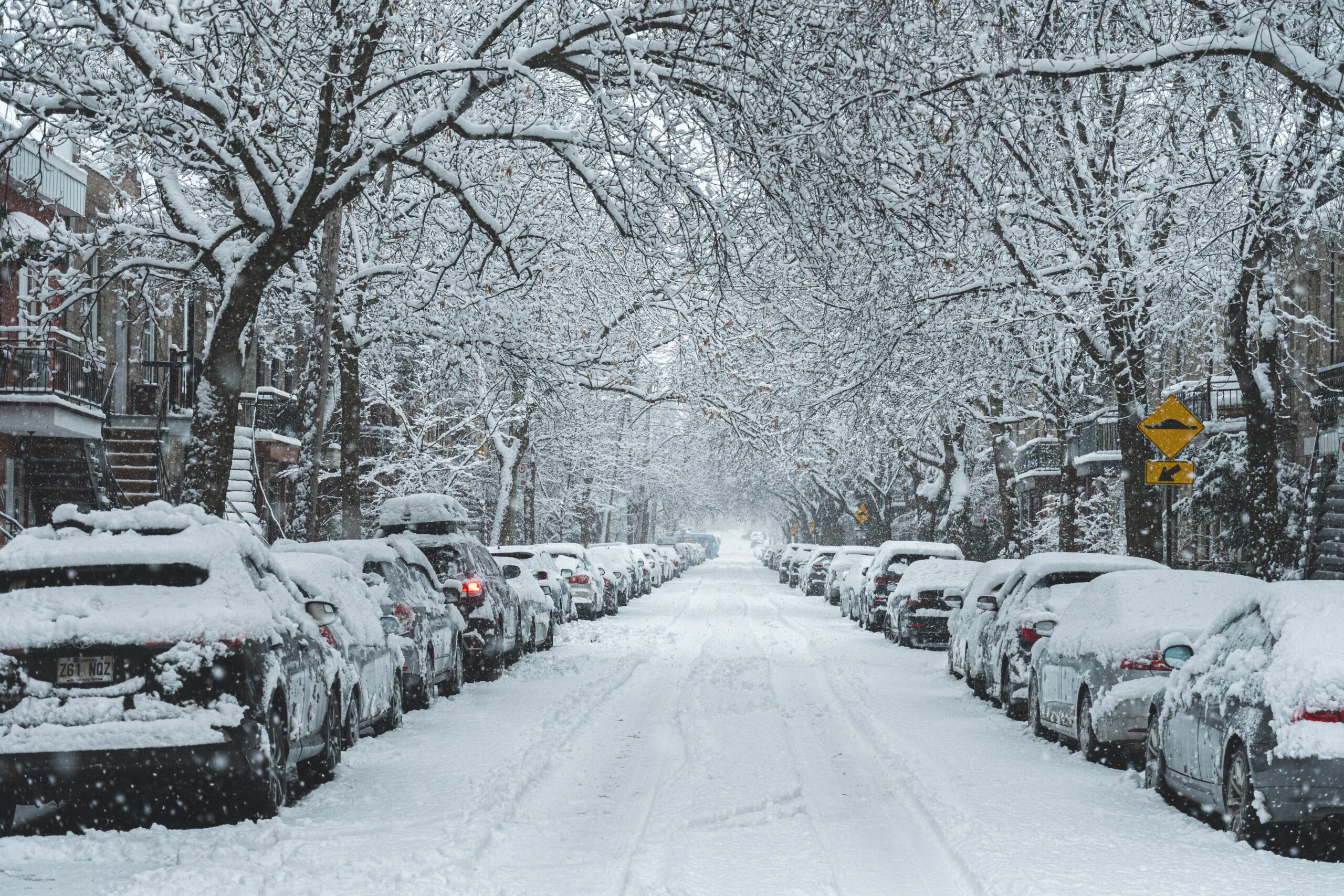
When temperatures drop, ice shows up fast on walkways, patios, ramps, driveways, farm entrances, and even around warehouses. The problem isn’t just slipping: repeated freezing and thawing can also damage surfaces over time. The good news is that de-icing doesn’t have to mean dumping piles of product in one spot. Applying an even, controlled layer is often the difference between “it kind of worked” and “it stayed safe all morning.”
Why spraying matters in de-icing
Most de-icing products work best when they’re spread consistently. If you over-apply, you waste product and can leave residue. If you under-apply or apply unevenly, ice returns in patches (the worst kind—because it looks safe until it isn’t).
Spraying helps you:
Cover large areas quickly
Reach awkward spots (edges, corners, slopes, ramps)
Apply a more uniform layer than “shake and hope” methods
Use the product more efficiently
De-icing vs anti-icing (quick difference)
De-icing: you treat after ice has formed to break the bond and melt it.
Anti-icing: you treat before freezing conditions to prevent ice from bonding in the first place.
For many sites (homes, gardens, small farms, maintenance teams), anti-icing can be the easiest win: treat ahead of time, then top up lightly when needed.
What to consider before you spray anything
Different de-icing chemicals behave differently depending on temperature, surface type, and moisture. Because there are so many products on the market, it’s important to test chemical compatibility before use—especially if you’re using stronger formulations. Sanz Group USA specifically recommends checking compatibility before application and notes a maximum liquid temperature of 104°F.
(And of course: follow the label instructions and local rules—especially in public or environmentally sensitive areas.)
Which Pulmic model fits the job?
Pulmic sprayers are built for controlled application in real working environments, agriculture, industrial use, and maintenance.
That same “controlled application” approach is exactly what you want for winter treatments: steady coverage, less waste, and faster work.
 Pulmic Pegasus 35 (big areas, fewer refills)
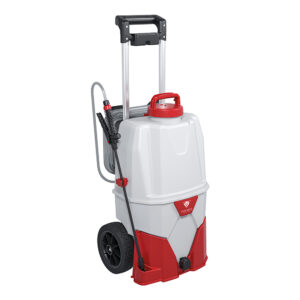 Pulmic Pegasus 35 (big areas, fewer refills)
If you’re handling parking entrances, warehouse yards, long walkways, or you want to minimize downtime, the Pegasus 35 is built for volume and range:
9.25 gal capacity
20ft reinforced hose for reach around obstacles
Max flow 0.61 GPM for efficient coverage
3-speed control system
De-icing angle: Great when you need steady, consistent output over bigger surfaces without constantly stopping to refill.
Pulmic Pegasus 15 (everyday winter maintenance)
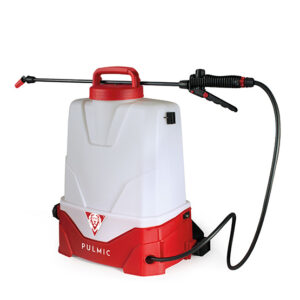 Pulmic Pegasus 15 (everyday winter maintenance)
A strong option for smaller facilities, entrances, sidewalks, patios, and teams that want something compact:
4.0 gal capacity
Max flow: ~0.58 GPM
3-speed control system
Max 58 PSI pressure
De-icing angle: Perfect for routine pre-treatment rounds before a cold night, or quick response when conditions change.
Pulmic Industrial 15 (controlled application + tougher-use mindset)
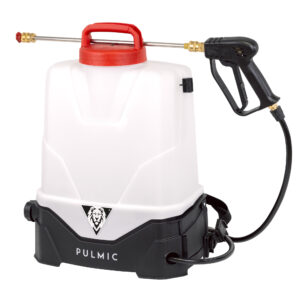 Pulmic Industrial 15 (controlled application + tougher-use mindset)
If your winter workflow overlaps with industrial cleaning / facility maintenance, the Industrial 15 (Viton) is a solid crossover tool:
4.0 gal capacity
Max pressure: ~58 PSI
Nozzle-based flow options: ~0.39 to 0.70 GPM
3S control system (three pressures + optimized battery autonomy)
Santoprene membrane with Viton seals
De-icing angle: Useful when you want a controlled, consistent application rate and a sprayer that’s designed with “industrial use” in mind.
Pulmic Raptor 16 (manual, reliable, no charging needed)
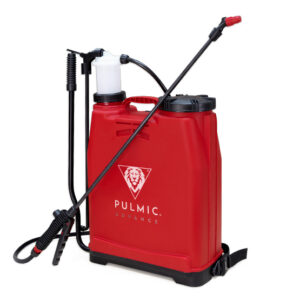 Pulmic Raptor 16 (manual, reliable, no charging needed)
For teams who want a manual backup (or don’t want to rely on batteries in cold conditions), the Raptor 16 is a workhorse:
4.48 gal total capacity
Max pressure 87 PSI
51 inch hose
Viton O-rings and fiberglass lance
De-icing angle: Excellent for spot-treating steps, tight areas, or as a dependable “Plan B” when temperatures are brutal.
Quick how-to: de-icing with a sprayer (simple, repeatable)
Pick the right liquid de-icer for your surface and local rules (and follow the label mixing ratios if it’s a concentrate).
Pre-check the area: mark drains, sensitive landscaping, and high-traffic zones.
Apply in a light, even pass (don’t flood the area—coverage matters more than soaking).
Let it work, then reapply lightly only on stubborn patches.
Mechanical assist: scraping after application is often the fastest way to clear safely.
Post-job rinse/flush: run clean water through the system to reduce residue buildup (especially important if the solution can crystallize when it dries).
What to avoid (this saves equipment + headaches)
Don’t “overdose” product—more isn’t always better; it can increase residue and tracking indoors.
Don’t spray into drains or soil edges, protect landscaping and waterways.
Don’t leave solution sitting in the sprayer long-term, flush after use.
If winter conditions are part of your routine, the right sprayer makes de-icing faster, cleaner, and more consistent. Choose the model that fits your workload; Pegasus 15, Pegasus 35, Industrial 15, or Raptor 16 and get set up for safer surfaces all season.
Browse our sprayers here:
👉Pulmic Sprayers